



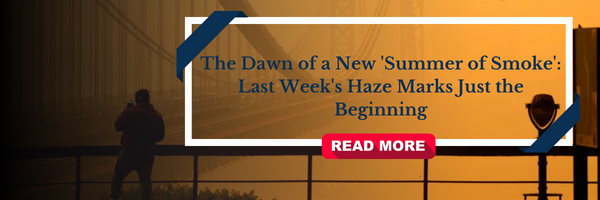
The events that took place last week along the Eastern Seaboard were extraordinary. The sight of smoke-filled skies over iconic locations like the Big Apple and the nation’s capital, as well as the postponement of professional sporting events, seemed unreal, almost like scenes from a movie. Although the smoke has mostly dissipated for now, it doesn’t mean that those apocalyptic scenes won’t return later in the summer.
Canada’s fire season is just beginning, and with more uncontrollable fires burning, we may be in for a summer dominated by smoke. Quinn Barber, a fire science analyst with the Canadian Forest Service, expressed that we should expect worse air quality than what we’re accustomed to, not only in Canada but also for those unfortunate enough to be downwind along the Eastern Seaboard.
Last week’s events have served as an eye-opener for many who had not fully realized the yearly impact of such fires in the Western regions. It has also highlighted how far-reaching the effects of wildfires can be. However, Canada is bearing the brunt of these effects. Barber describes the map of fires in Canada as resembling chickenpox, with approximately 50 fires, 30 of which occurred in just one day.
As of a week ago, Canada had evacuated more people from their homes due to wildfires than ever before in a fire season. Barber also mentioned that these fires result in thousands of hospitalizations and hundreds of premature deaths each year. With this year’s fire season surpassing all records, these numbers could increase, and it’s disheartening to note that it’s only June, with at least three more months of fire season remaining.
According to Barber, over 4.5 million hectares (11 million acres) have burned, making it the largest area burned in spring fire season history. Canada’s hot and dry conditions in recent months have created unprecedented conditions for forest fires. Lightning strikes from spring storms have ignited as many as 100 new fires daily, leading to fires that burn in unprecedented ways.
The sheer number of fires makes it impossible to extinguish them all simultaneously, regardless of the resources deployed. Many of the fires in Quebec are located in remote areas, far from roads or accessible points, making it challenging to contain them. While such fires may benefit the forest ecosystem, they pose significant risks to human settlements. Barber suggests that living in these areas requires adaptation and preparedness for such events.
It is possible that smoke-filled summer skies and poor air quality may become the new normal during the months when outdoor activities are typically enjoyed. Although this week’s smoke forecast shows improvement, with better air quality across the East Coast and the likelihood of rain in the Northeast and eastern sections of Canada, the smoke may return in the coming weeks as the wildfire season continues throughout Canada.