



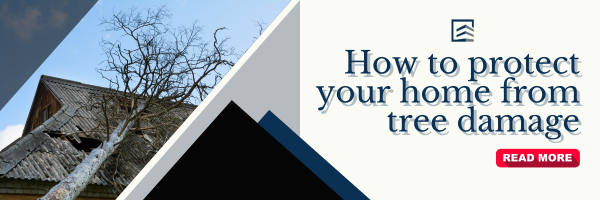
While mature trees can enhance the appeal of your home, they can also pose risks and lead to property damage. Though standard home insurance policies may not cover regular tree maintenance, they may offer coverage for damages caused by trees during storms or other covered perils.
Key takeaways:
- Home insurance may cover tree debris removal in specific scenarios, such as after a windstorm or ice storm, but only up to your policy’s limits.
- Your policy is unlikely to pay for the removal of dead, rotted, overgrown, or potentially damaging trees on your property.
- If one of your trees falls onto a neighbor’s home, your neighbor’s insurance will generally handle the damages.
How can trees cause property damage? While trees offer aesthetic value, they come with maintenance costs and the potential to damage your home in various ways, including:
- Roof damage from falling tree limbs during storms.
- Siding damage from limbs rubbing against or blowing into your home.
- Interior water damage from fallen tree limbs during storms.
- Damage to service lines caused by tree roots growing into them.
- Blocked driveways due to fallen trees.
When does homeowners insurance cover tree removal? Home insurance may cover tree damage and removal under specific circumstances. If a tree or its limb falls on your home, a detached structure, or blocks your driveway, your policy might cover the removal, up to the specified limit. However, the cause of the tree falling matters. Removal may be covered for certain scenarios, but only if it falls on your home, outbuilding, or driveway, including windstorms, hail storms, ice or snow weight, lightning, and other perils listed in your policy. Each policy varies, so it’s essential to discuss the specifics with your agent.
When does homeowners insurance not cover tree removal? Certain tree removal scenarios are not covered by standard home insurance. Your provider may deny removal coverage if a tree falls:
- During a flood or earthquake.
- If the tree is dead, rotted, or not well maintained.
Will my home policy cover tree damage to my neighbor’s house? Usually, your policy won’t cover damage to your neighbor’s house caused by a tree on your property. Your neighbor’s home insurance is generally responsible for paying for the damages. However, if you are found liable for the damages due to negligence in removing a known hazardous tree, your policy might come into play.
How can I protect my home from tree damage? To prevent damage or injuries, regularly inspect and maintain the trees on your property by:
- Removing dead or overgrown limbs and trees.
- Hiring professionals to trim around power lines regularly.
- Monitoring and addressing root systems that may interfere with underground pipes or wiring.
- When planting new trees, choose weather-tolerant species strategically positioned to avoid interference with existing structures or systems.